Turning Savers Into Investors
Designing Financial Resilience for Young Britain
Service Project
Financial Services
Behavioral Analysis
Partner
Partner
EY Studio+ × Royal College of Art
EY Studio+ × Royal College of Art
Role
Role
Service Designer
Service Designer
Time
Time
10 weeks
10 weeks
Impact
Impact
Stakeholder validated service blueprint for behavioral investing targeting UK 25-35s
Stakeholder validated service blueprint for behavioral investing targeting UK 25-35s
Methods
Methods
COM-B framework, ecosystem mapping, service blueprinting, persona development, Figma
COM-B framework, ecosystem mapping, service blueprinting, persona development, Figma
OVERVIEW
£140 billion sits idle in UK savings accounts while UK citizens watch inflation erode their money, knowing they should invest but are paralyzed by fear. Through a 10 week collaboration with EY Studio+ and RCA, our team designed GRO: a behavioral financial product that uses progressive reward systems to build investing confidence. We addressed the psychological barriers that traditional investment platforms ignore to turn financial anxiety into financial agency.
£140 billion sits idle in UK savings accounts while UK citizens watch inflation erode their money, knowing they should invest but are paralyzed by fear. Through a 10 week collaboration with EY Studio+ and RCA, our team designed GRO: a behavioral financial product that uses progressive reward systems to build investing confidence. We addressed the psychological barriers that traditional investment platforms ignore to turn financial anxiety into financial agency.

THE CHALLENGE
THE CHALLENGE
Chancellor Rachel Reeves' 2025 Mansion House speech challenged financial services to solve a paradox: UK savers have £140bn in low-yield savings accounts losing value to inflation, while businesses starve for investment capital. The brief's two objectives were as follows:
Help people invest by moving stagnant saved money into active investments
Increase UK GDP through mobilized household capital
Chancellor Rachel Reeves' 2025 Mansion House speech challenged financial services to solve a paradox: UK savers have £140bn in low-yield savings accounts losing value to inflation, while businesses starve for investment capital. The brief's two objectives were as follows:
Help people invest by moving stagnant saved money into active investments
Increase UK GDP through mobilized household capital
MY APPROACH
MY APPROACH
I contributed to behavioral research synthesis (translating COM-B findings into design interventions), ecosystem mapping (particularly understanding tax policy as a behavioral incentive), and service blueprint development (mapping the 24-month emotional progression). Throughout, my team and I presented to EY compliance advisors and service designers to learn to position design decisions within regulatory constraints.
I contributed to behavioral research synthesis (translating COM-B findings into design interventions), ecosystem mapping (particularly understanding tax policy as a behavioral incentive), and service blueprint development (mapping the 24-month emotional progression). Throughout, my team and I presented to EY compliance advisors and service designers to learn to position design decisions within regulatory constraints.
WEEK 1-3
WEEK 1-3
RESEARCH & BEHAVIORAL MAPPING
None of us had UK financial services backgrounds, so we approached this as outsiders which turned out to be an advantage. We weren't constrained by industry assumptions about how things should work.
None of us had UK financial services backgrounds, so we approached this as outsiders which turned out to be an advantage. We weren't constrained by industry assumptions about how things should work.
HISTORICAL CONTEXT
HISTORICAL CONTEXT
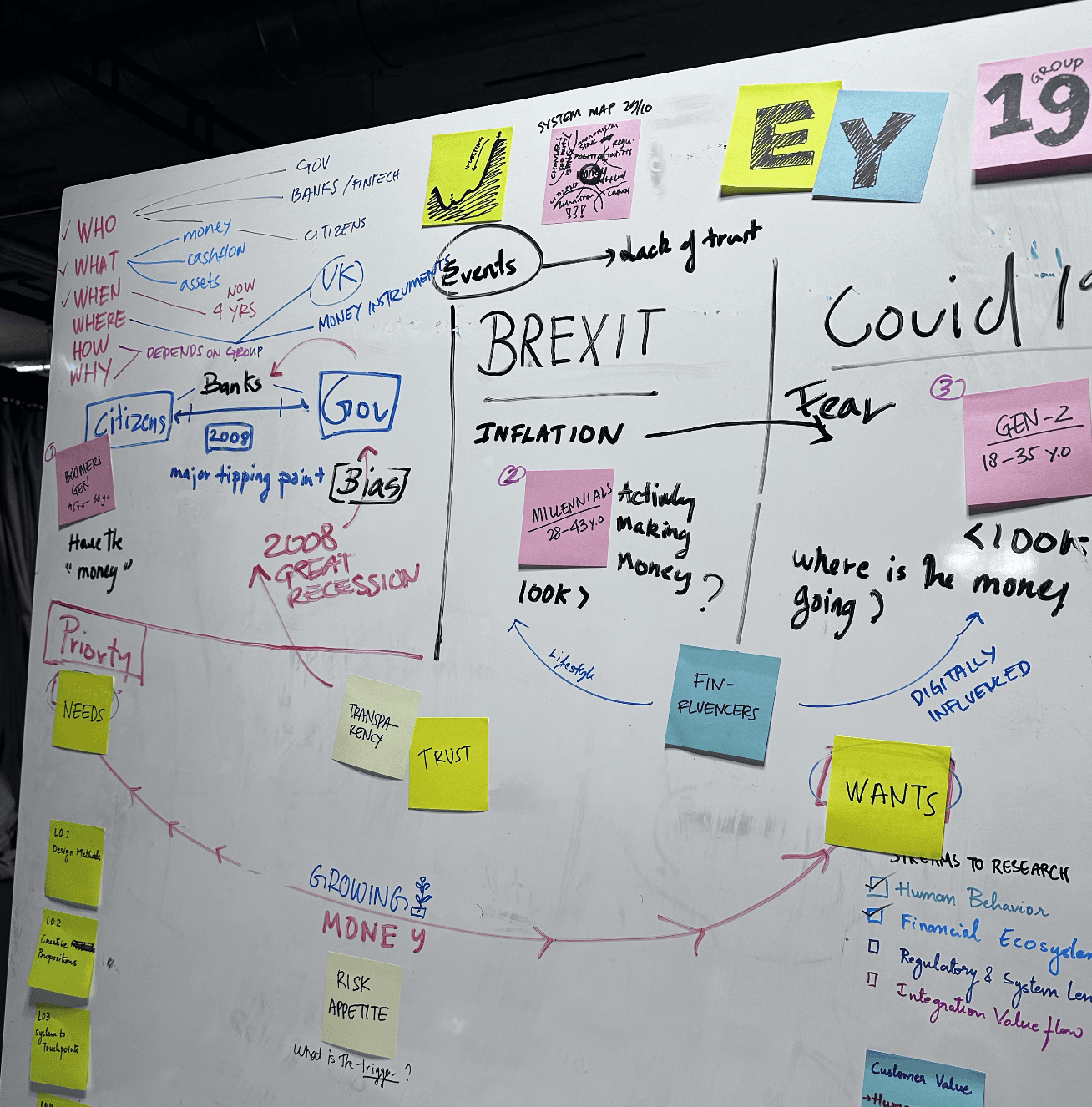
We started broadly, analyzing how UK financial crises shaped saving behavior:
2008 Financial Crash - The Planner(45-55): trust collapsed, conservative, risk-averse
Brexit - The Realist (35-45): permanent uncertainty, short-term thinking
COVID- The Optimizer (25-35): wants to invest but is terrified of losing it all
We started broadly, analyzing how UK financial crises shaped saving behavior:
2008 Financial Crash - The Planner(45-55): trust collapsed, conservative, risk-averse
Brexit - The Realist (35-45): permanent uncertainty, short-term thinking
COVID- The Optimizer (25-35): wants to invest but is terrified of losing it all
ECOSYSTEM MAPPING
ECOSYSTEM MAPPING
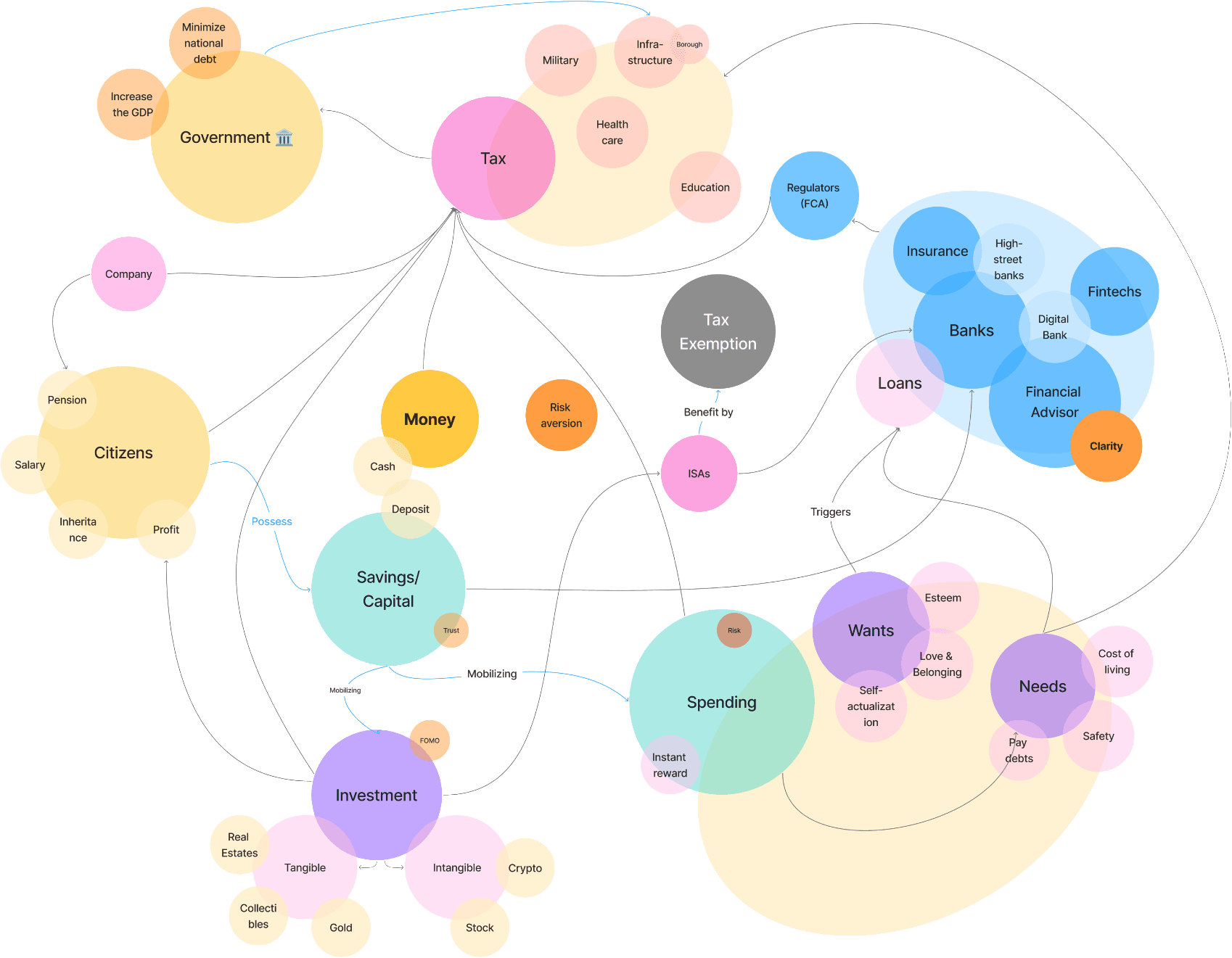
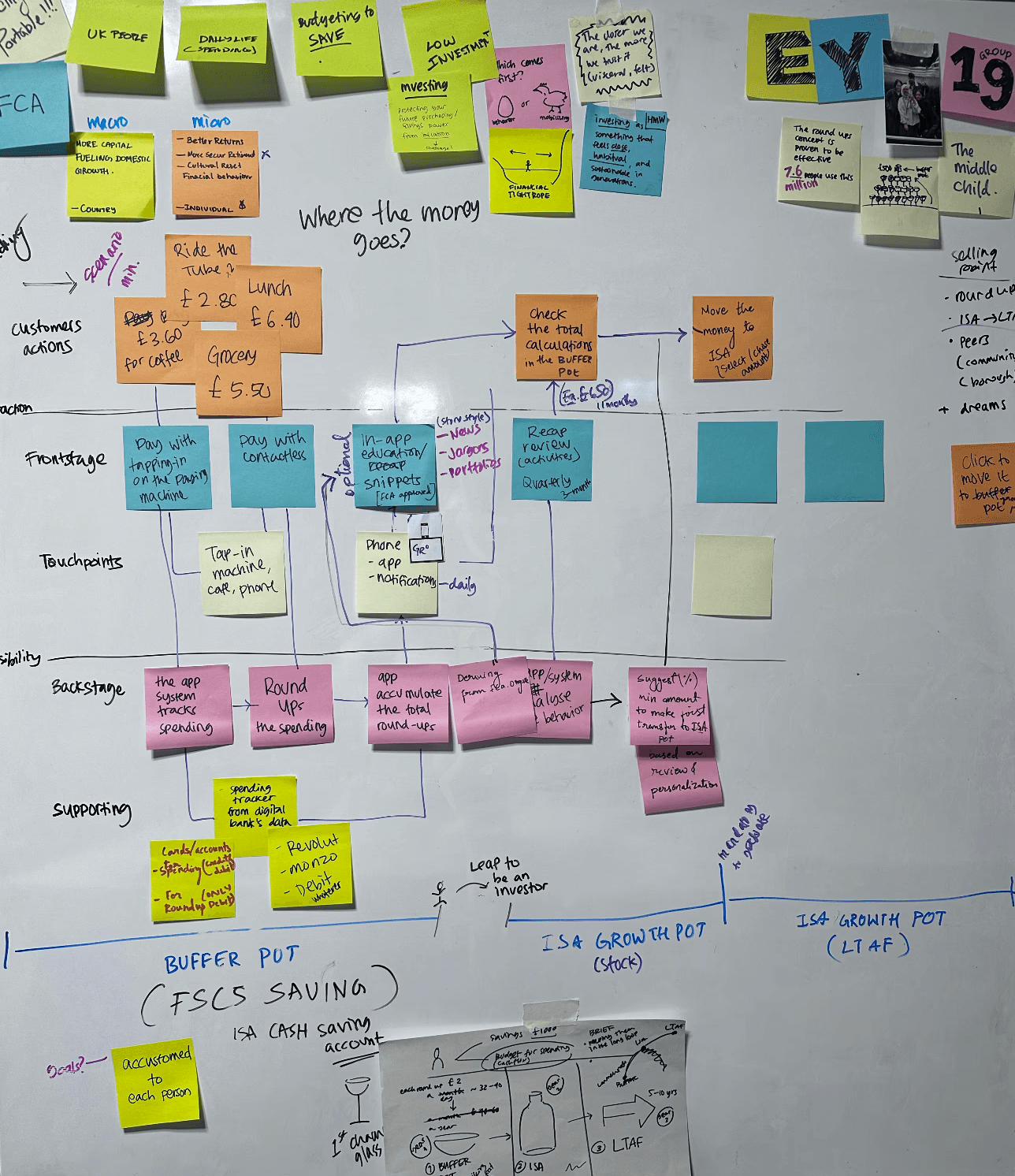
We traced money flow from UK households through the finance system, mapping stakeholders, power dynamics, and where cash gets stuck.
The insight: Tax sits at the center. Government objectives of this brief align with individual behavior through ISAs tax-free investment accounts.
The infrastructure already exists. We just needed to design the behavioral bridge to get people using it.
We traced money flow from UK households through the finance system, mapping stakeholders, power dynamics, and where cash gets stuck.
The insight: Tax sits at the center. Government objectives of this brief align with individual behavior through ISAs tax-free investment accounts.
The infrastructure already exists. We just needed to design the behavioral bridge to get people using it.
COM B BEHAVIORAL ANALYSIS
COM B BEHAVIORAL ANALYSIS
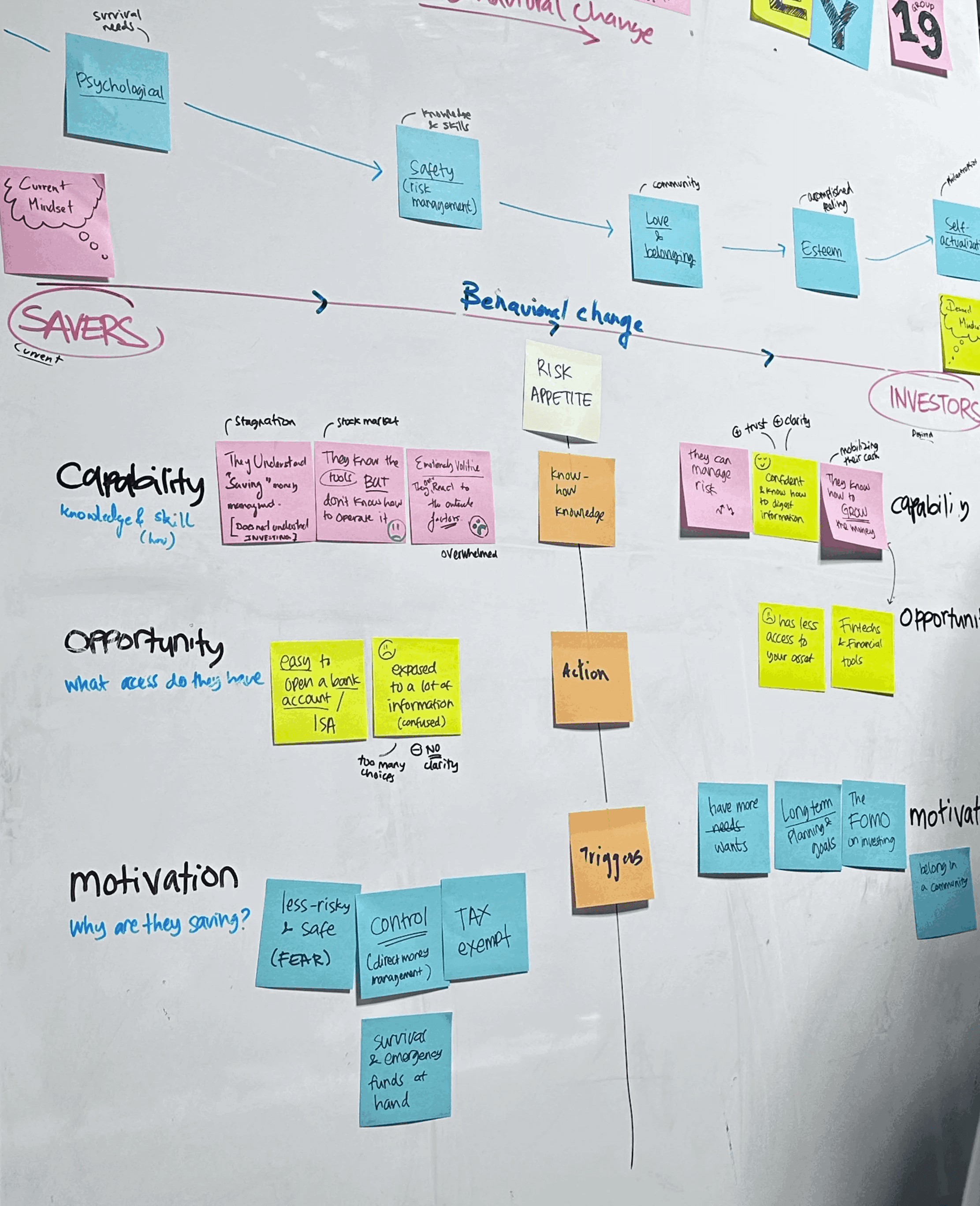
We applied COM-B to map barriers against Maslow's hierarchy:
Capability: People understand investing conceptually, they don't know how to start safely.
Opportunity: High minimums (£500-1000), time-intensive research, no trusted guidance.
Motivation: Loss aversion feels safer than potential gains, status quo bias, no visible progress
The finding: It is not an education problem alone but also a psychological problem. Fear and inertia stop the first step.
We applied COM-B to map barriers against Maslow's hierarchy:
Capability: People understand investing conceptually, they don't know how to start safely.
Opportunity: High minimums (£500-1000), time-intensive research, no trusted guidance.
Motivation: Loss aversion feels safer than potential gains, status quo bias, no visible progress
The finding: It is not an education problem alone but also a psychological problem. Fear and inertia stop the first step.
WEEKS 4-5:
WEEKS 4-5:
WEEKS 4-5:
PERSONA DEVELOPMENT & INSIGHT SYNTHESIS

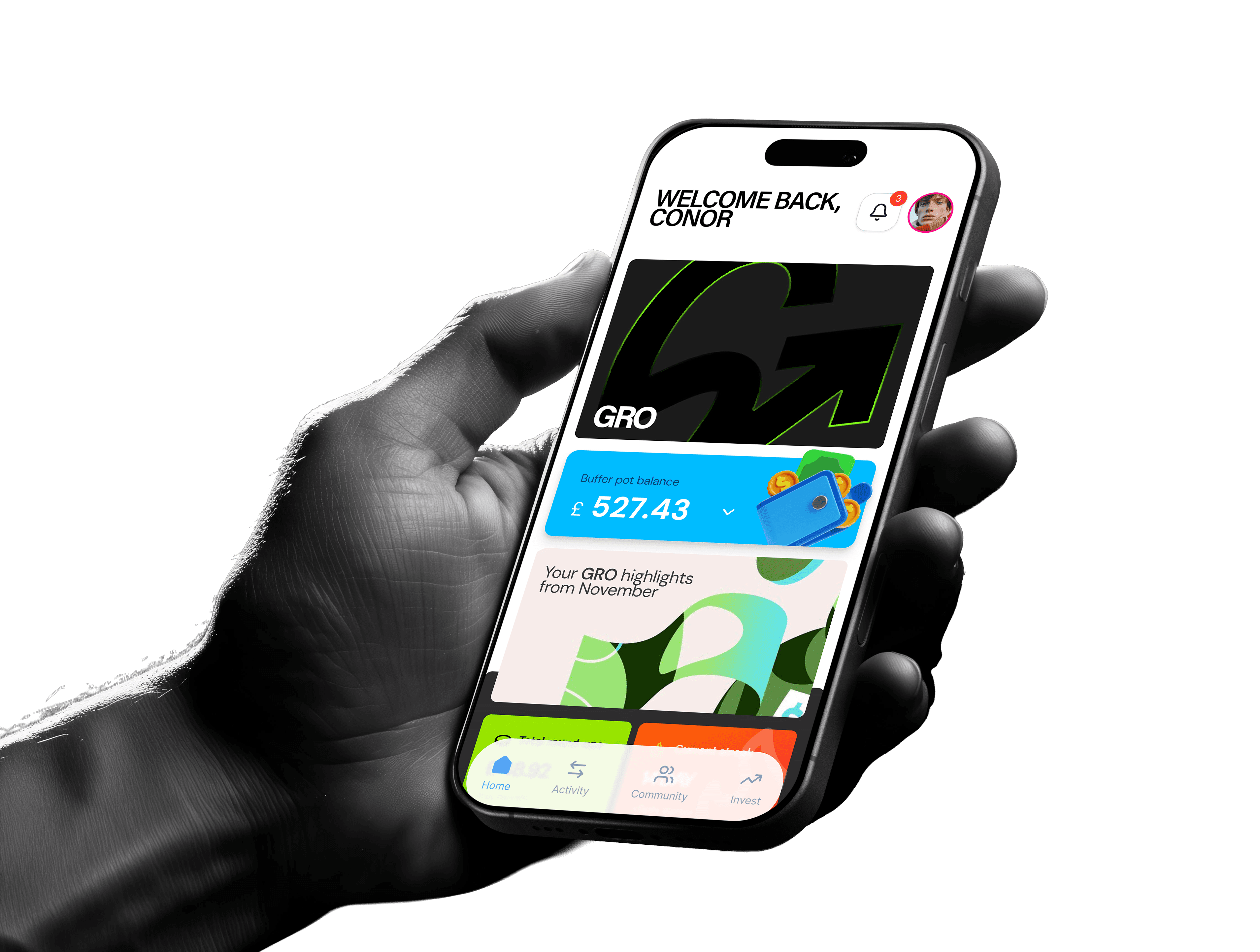
MEET CONNOR
28, Retail Manager, £32k/year
28, Retail Manager, £32k/year
BARRIERS:
Tries saving but a sudden unexpected expense sets him back
He is aware he needs to invest, but doesn't know where to start
Sees others investing and fears he's missing out
BARRIERS:
Tries saving but a sudden unexpected expense sets him back
He is aware he needs to invest, but doesn't know where to start
Sees others investing and fears he's missing out
"I've never had a safety cushion. When shocks hit, I don't spiral. I just stop saving entirely."
"I've never had a safety cushion. When shocks hit, I don't spiral. I just stop saving entirely."
NUGGETS
From persona research and COM-B mapping, we identified intervention points:
From persona research and COM-B mapping, we identified intervention points:
Life happens
Unexpected expenses break saving habits. And starting again feels jarring.
Unexpected expenses break saving habits. And starting again feels jarring.
Small wins
Micro-saving tools increase saving frequency & make it easy to take the first step.
Micro-saving tools increase saving frequency & make it easy to take the first step.
Complexity
Consumers facing choice overload are far less likely to take action in financial action.
Consumers facing choice overload are far less likely to take action in financial action.
Choice fatigue
People trust automation more than themselves to be truly consistent daily.
People trust automation more than themselves to be truly consistent daily.
WEEKS 6-8:
WEEKS 6-8:
SERVICE DESIGN & PROTOTYPING
A TWO-TIER SERVICE PROPOSITION
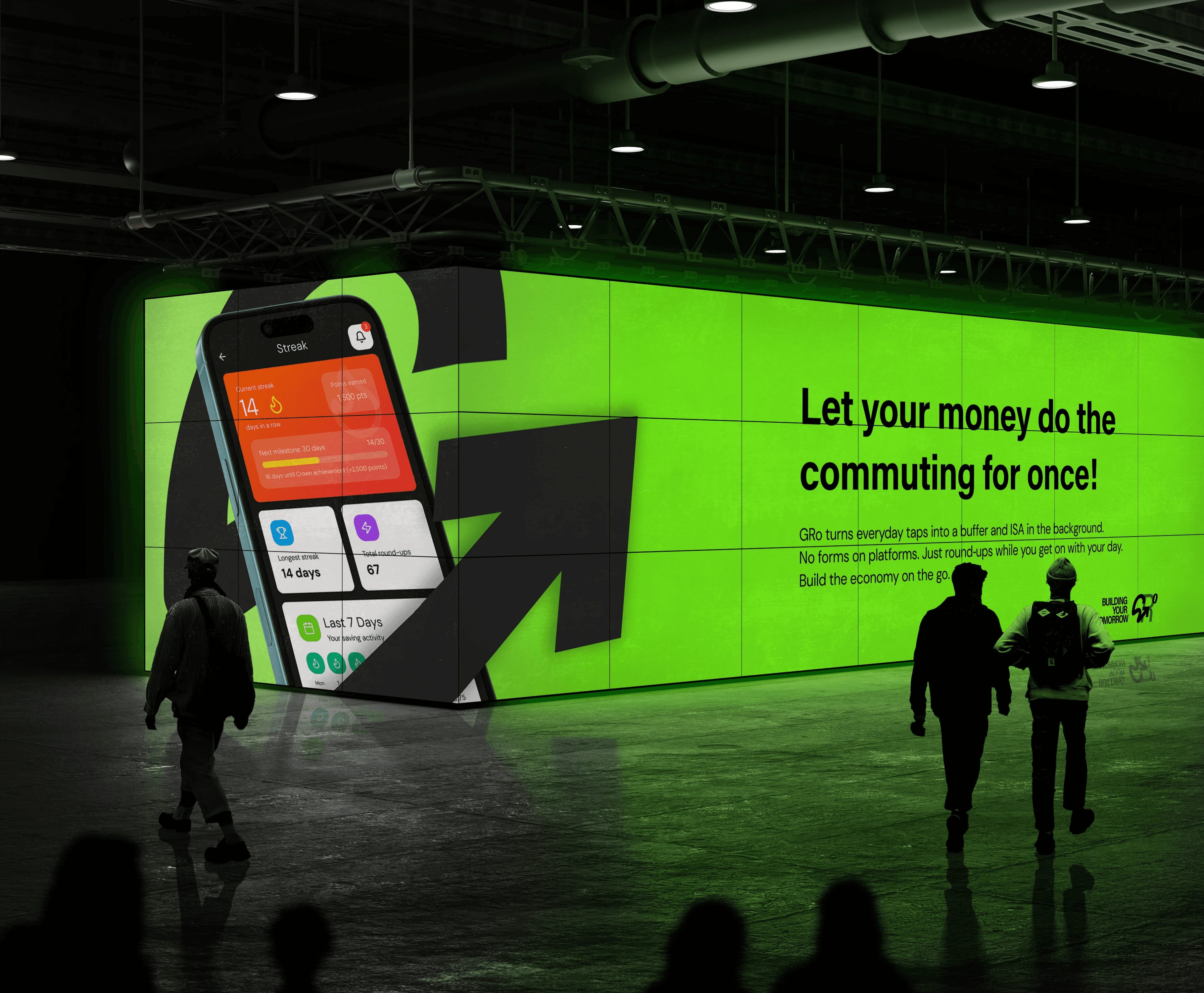
GRO is a two-part behavioral progression system that turns tiny, low-risk money moments into long-term investing confidence.
Climbing Everest of investing, one base at a time
A TWO-TIER SERVICE PROPOSITION
GRO is a two-part behavioral progression system that turns tiny, low-risk money moments into long-term investing confidence.
Climbing Everest of investing, one base at a time
Behavioral Progression System Part 1 - The GRO Service Architecture
Behavioral Progression System Part 1 - The GRO Service Architecture
BUILD
YOUR CUSHION
DURATION: 0-12 Mth
DURATION: 0-12 Mth
GOAL: RESILIENCE
GOAL: RESILIENCE
1.
1.
HOW THIS WORKS:
HOW THIS WORKS:

Every transaction rounds to the nearest £1
Every transaction rounds to the nearest £1


Spare change accumulates invisibly
Spare change accumulates invisibly

Builds a £500 - £700 safety net (FSCS protected)
Builds a £500 - £700 safety net (FSCS protected)
Behavioral Logic:
Invisible - no sacrifice felt.
Automation - no willpower needed.
FSCS protection - fear reduced.
Tangible goal - progress feels real.
Behavioral Logic:
Invisible - no sacrifice felt.
Automation - no willpower needed.
FSCS protection - fear reduced.
Tangible goal - progress feels real.
User Experience:
"You just saved £0.73" micro notifications
Weekly summary: "Your cushion is now £47"
Celebration and graduation to the next step the moment when the buffer complete
User Experience:
"You just saved £0.73" micro notifications
Weekly summary: "Your cushion is now £47"
Celebration and graduation to the next step the moment when the buffer complete
"
I've never had a safety cushion. Now I do. When shocks hit, I don't spiral.
I've never had a safety cushion. Now I do. When shocks hit, I don't spiral.
"
"
BECOME
AN INVESTOR
DURATION: 12-24+ Mth
DURATION: 12-24+ Mth
GOAL: CONFIDENCE
GOAL: CONFIDENCE
2.
2.
HOW THIS WORKS:
HOW THIS WORKS:
Once your buffer proves itself, you opt in to small monthly contributions (£10 - £20)
Once your buffer proves itself, you opt in to small monthly contributions (£10 - £20)

Money flows automatically to ONE small default pot
Money flows automatically to ONE small default pot

All gains inside the ISA = zero capital gains tax, zero tax
All gains inside the ISA = zero capital gains tax, zero tax
Behavioral Logic:
Buffer exists - psychological safety to take "risk."
One pot - no decision fatigue.
Can withdraw buffer anytime - control is preserved.
Behavioral Logic:
Buffer exists - psychological safety to take "risk."
One pot - no decision fatigue.
Can withdraw buffer anytime - control is preserved.
User Experience:
"You're an investor now" mindset shift messaging.
Growth transparency (but not daily volatility stress)
Educational content delivered progressively for the next step.
User Experience:
"You're an investor now" mindset shift messaging.
Growth transparency (but not daily volatility stress)
Educational content delivered progressively for the next step.
"
I'm an investor now. I handle volatility. I'm in control.
I'm an investor now. I handle volatility. I'm in control.
"
FUND
YOUR TOMORROW
DURATION: 24+ Mth
DURATION: 24+ Mth
GOAL: LONG TERM
GOAL: LONG TERM
3.
3.
HOW THIS WORKS:
Your money graduates to illiquid higher returning assets
Your money graduates to illiquid higher returning assets

Access to private equity, infrastructure projects, real estate, private credit
Access to private equity, infrastructure projects, real estate, private credit

Build long term growth, not just for you but the nation as well
Build long term growth, not just for you but the nation as well
Behavioral Logic:
Confidence gained - graduation to next step.
Investing in LTAFs - low volatility.
Backing UK infrastructure - responsible citizen emotion.
Behavioral Logic:
Confidence gained - graduation to next step.
Investing in LTAFs - low volatility.
Backing UK infrastructure - responsible citizen emotion.
User Experience:
Once confidence is gained, graduation to the next step.
Investing in low volatile LTAFs
User Experience:
Once confidence is gained, graduation to the next step.
Investing in low volatile LTAFs
"
I'm not just building personal wealth. I'm backing real UK infrastructure. I'm part of the solution.
I'm not just building personal wealth. I'm backing real UK infrastructure. I'm part of the solution.
"
GRO UI prototypes
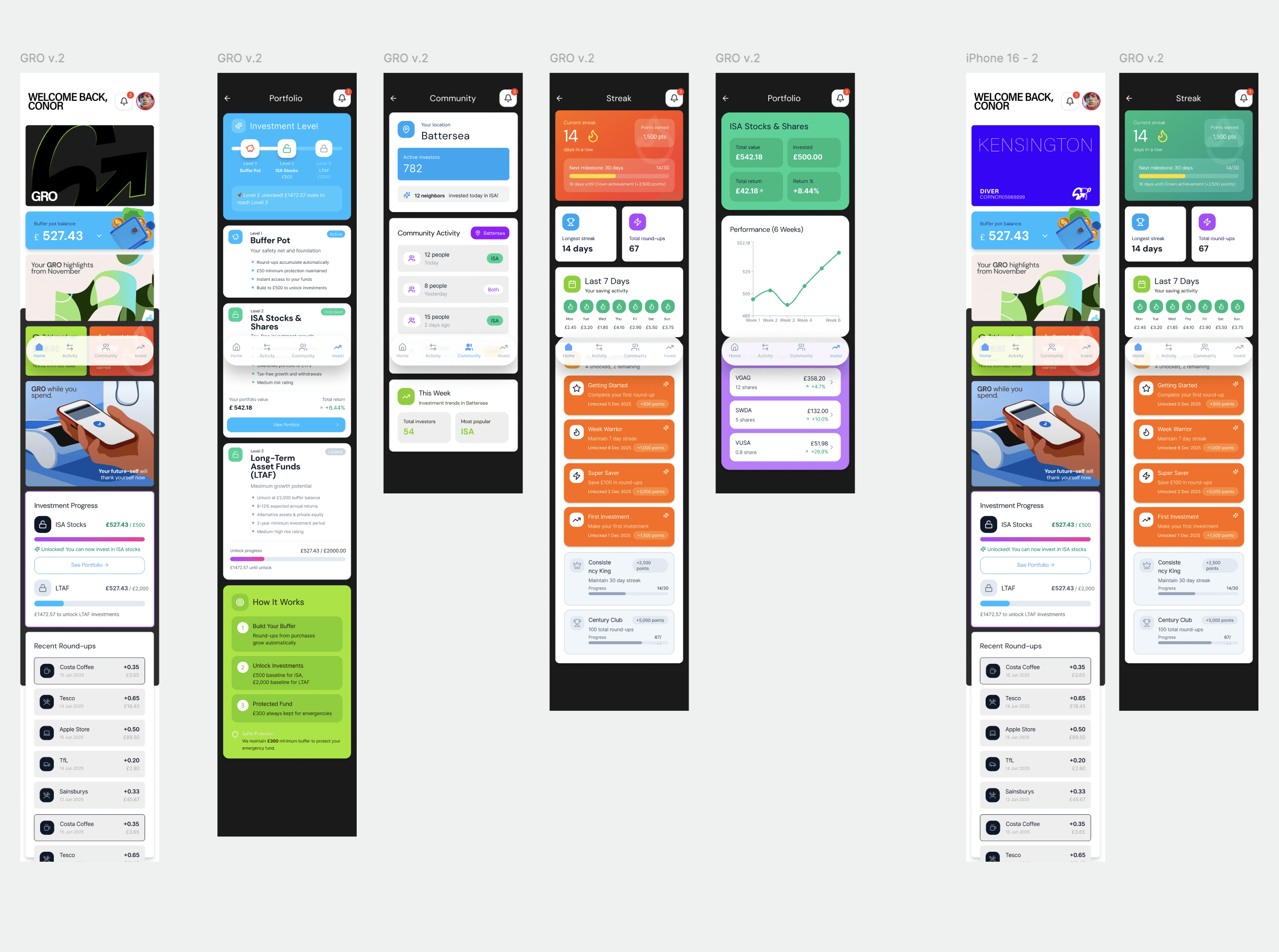
The Gap GRO Fills:
Current financial tools are binary:
Crisis management (overdrafts, payday loans) serves people in trouble
Wealth-building tools (advice from bots, ISAs) serve the already confident.
The middle working 25-35s with <£1k savings, too stable for crisis tools but too fragile for investing, are not structurally catered enough.
GRO bridges this gap with progressive safety-first design.
The Gap GRO Fills:
Current financial tools are binary:
Crisis management (overdrafts, payday loans) serves people in trouble
Wealth-building tools (advice from bots, ISAs) serve the already confident.
The middle working 25-35s with <£1k savings, too stable for crisis tools but too fragile for investing, are not structurally catered enough.
GRO bridges this gap with progressive safety-first design.
Behavioral Progression System Part 2 - The GRO Card - Rewards and Social Layer
Behavioral Progression System Part 2 - The GRO Card - Rewards and Social Layer
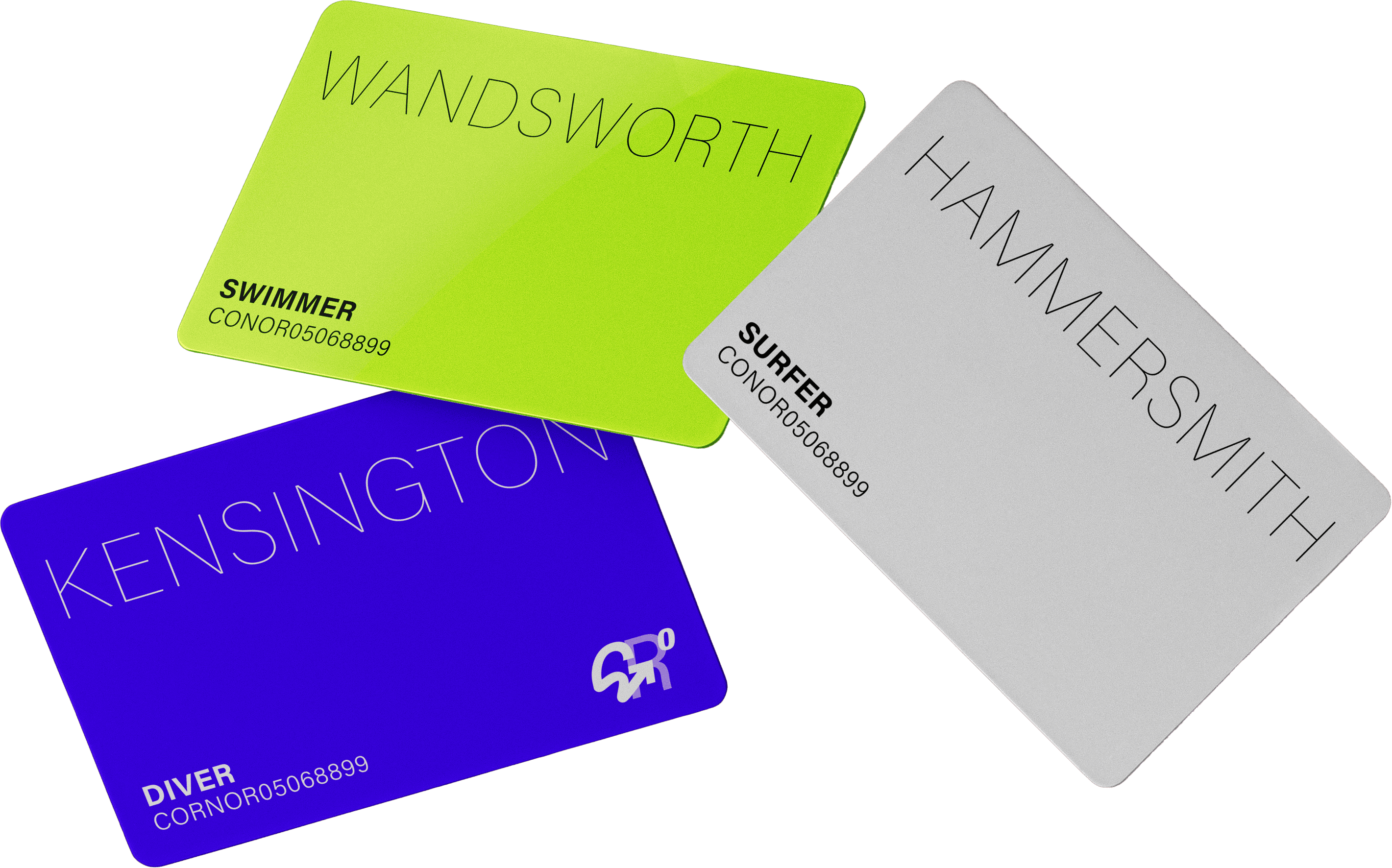
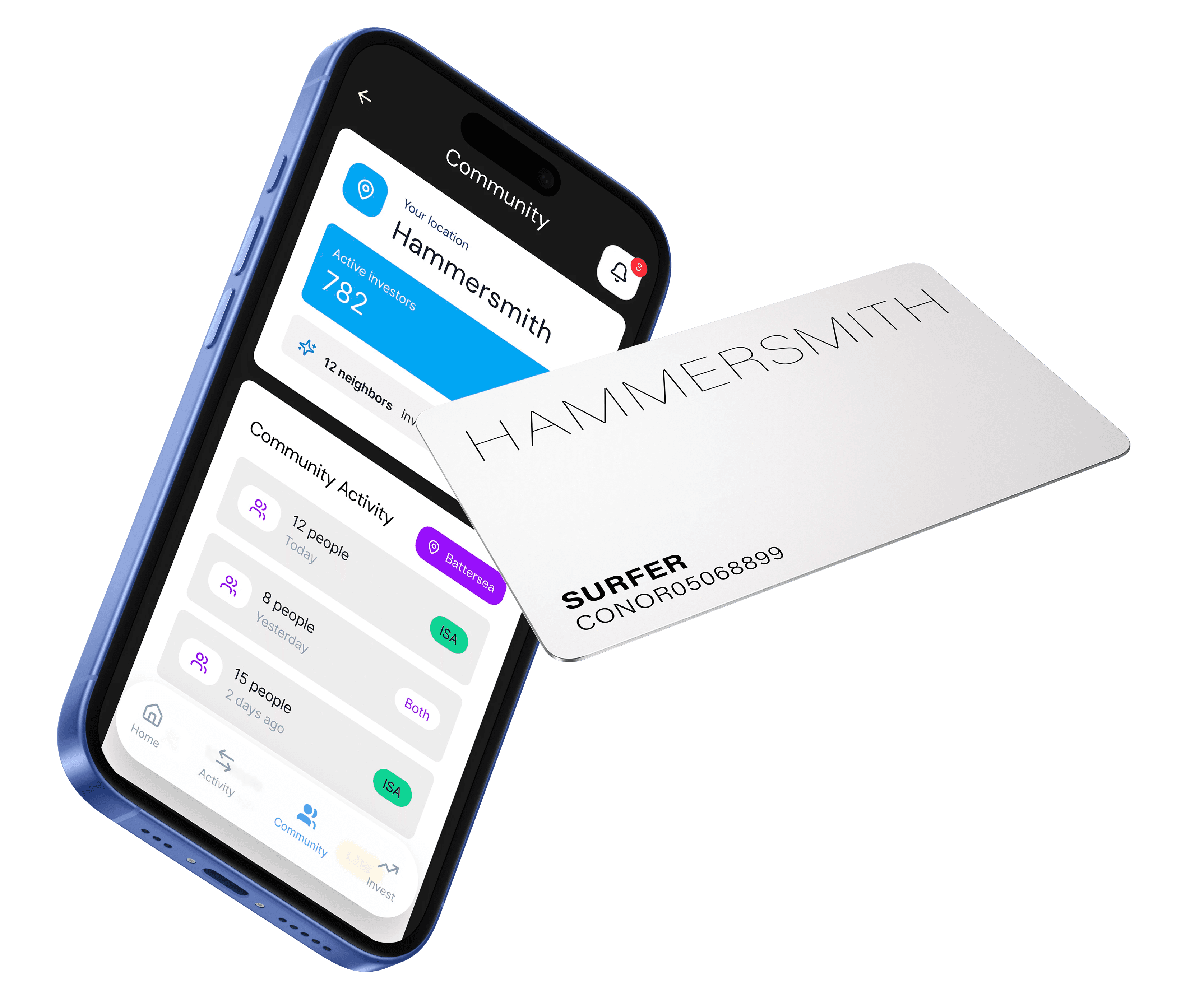
THE GRO CARD: MAKING INVISIBLE MONEY TANGIBLE
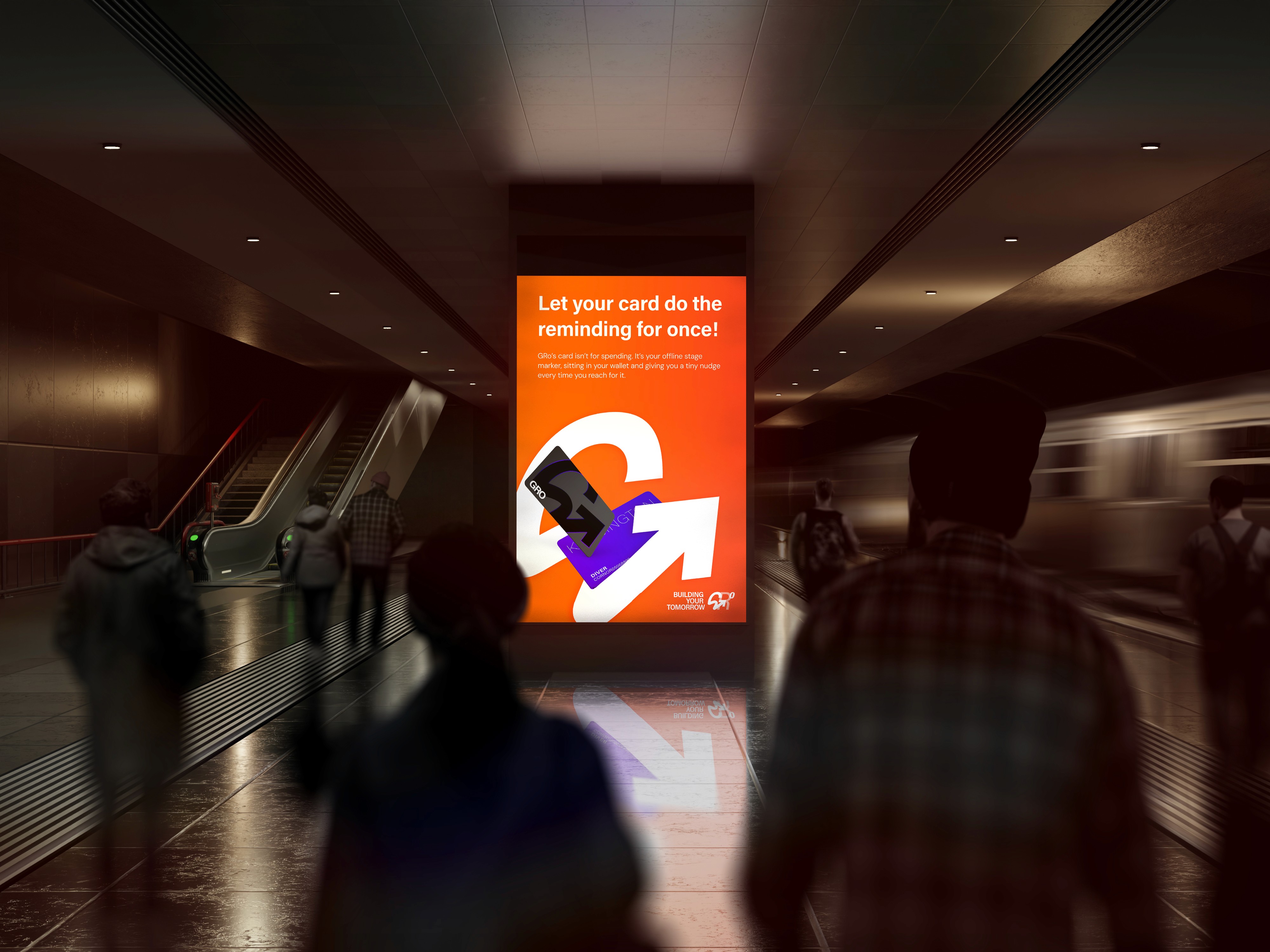
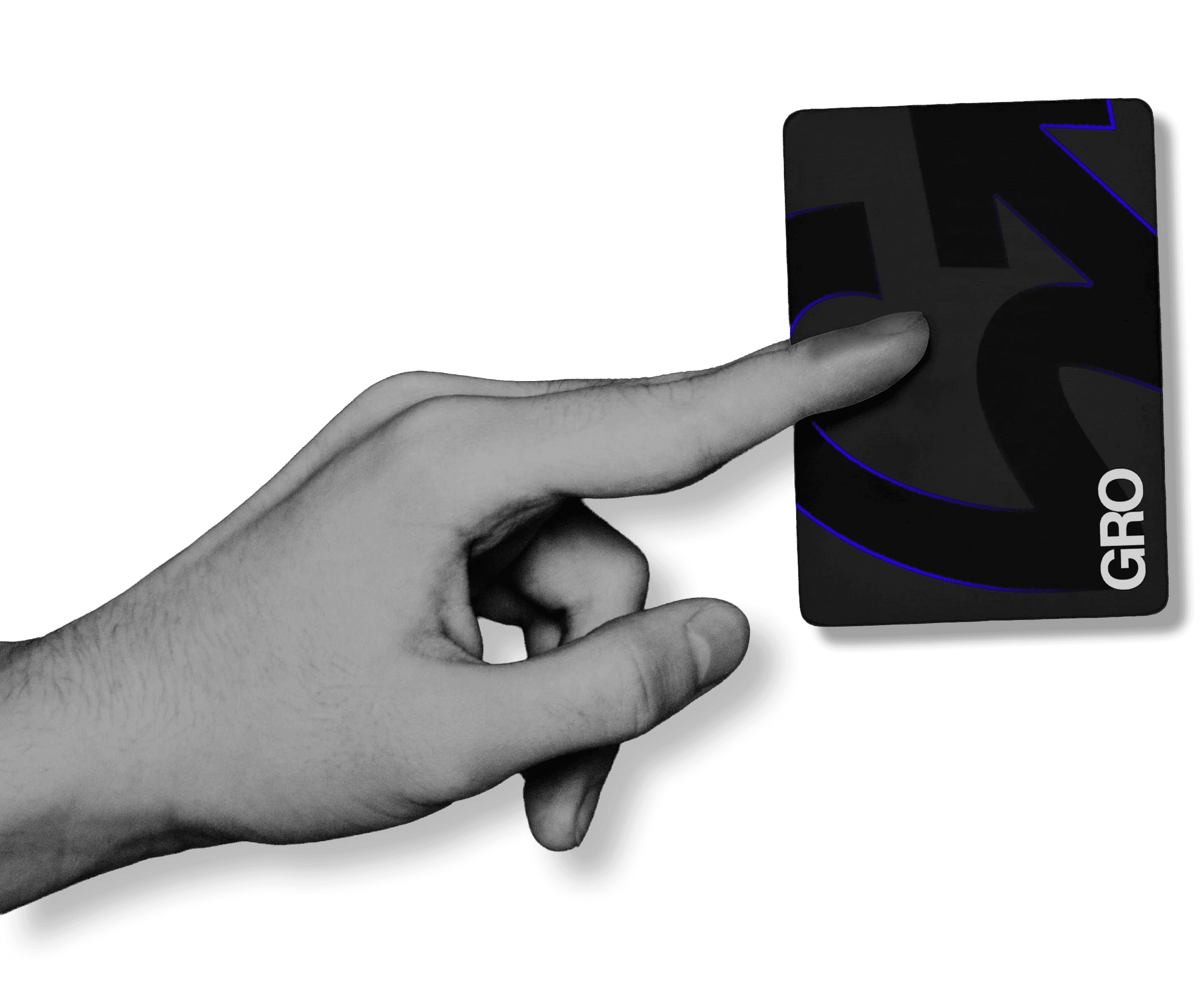
The physical card makes investment tangible, social, and culturally visible.
Community Membership Proof: Unlocks partner discounts that are automatically rounded up into the user’s buffer.
Progressive Card Levels: Swimmer (starting out, building buffer), Surfer (buffer complete, starting to invest), and Diver (confident investor, deeper commitment), rewarding participation and building confidence over time.
Social and Online Activation: The card connects you to local GRO communities (by borough/area). Turns investing from an isolated, scary thing into a collective, place-based experience.
THE GRO CARD: MAKING INVISIBLE MONEY TANGIBLE
The physical card makes investment tangible, social, and culturally visible.
Community Membership Proof: Unlocks partner discounts that are automatically rounded up into the user’s buffer.
Progressive Card Levels: Swimmer (starting out, building buffer), Surfer (buffer complete, starting to invest), and Diver (confident investor, deeper commitment), rewarding participation and building confidence over time.
Social and Online Activation: The card connects you to local GRO communities (by borough/area). Turns investing from an isolated, scary thing into a collective, place-based experience.
THE GRO REWARD LOOP:
Your Everyday Spend. Their Marketing Budget. Your Buffer
THE GRO REWARD LOOP:
Your Everyday Spend. Their Marketing Budget. Your Buffer
Regular everyday spending by the user
Regular everyday spending by the user
Non partners, regular round up still works
Non partners, regular round up still works
Discount at recognized Gro reward partners
Discount at recognized Gro reward partners
Discount moved to buffer pot
Discount moved to buffer pot
Gro recognizes reward partners
Gro recognizes reward partners

WHY THE PHYSICAL CARD MATTERS
Behavioral insight: abstract digital savings don't feel real. A card you carry makes it real. You use it at the coffee shop, and someone asks, "What's that card?" Now you're talking about investing. Social proof. Visible progress. Tangible identity shift.
WHY THE PHYSICAL CARD MATTERS
Behavioral insight: abstract digital savings don't feel real. A card you carry makes it real. You use it at the coffee shop, and someone asks, "What's that card?" Now you're talking about investing. Social proof. Visible progress. Tangible identity shift.
WEEKS 9-10:
WEEKS 9-10:
SERVICE BLUEPRINT & IMPACT
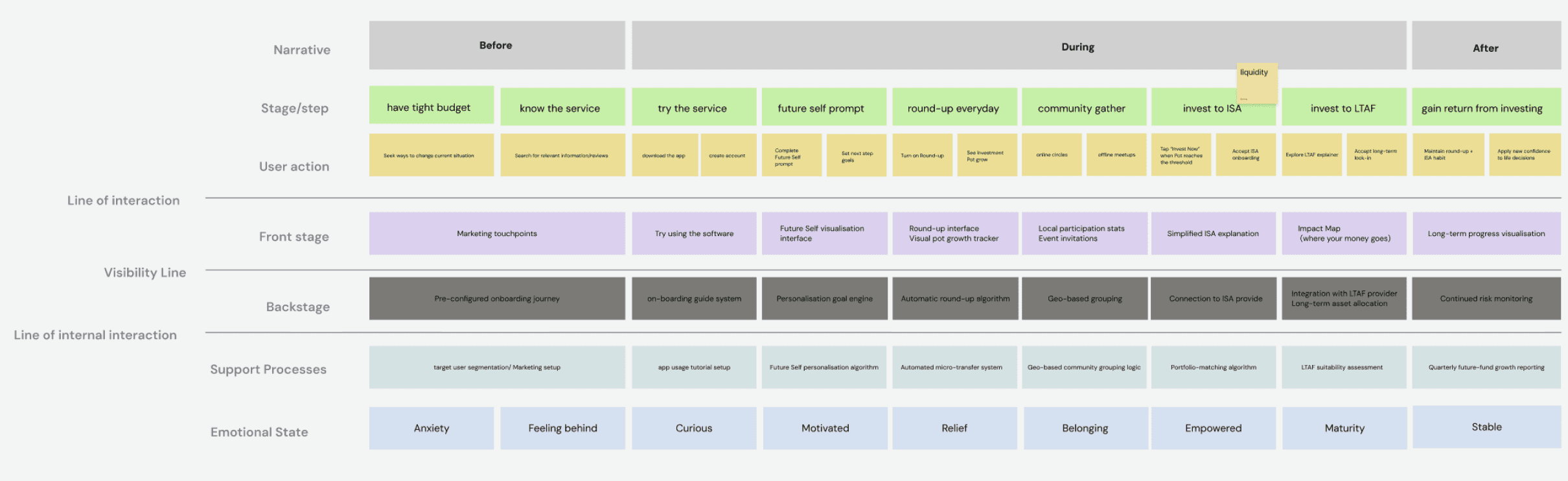
The structure: Three phases (buffer building, investment activation, habit formation), mapped across five layers:
What does the user see?
What does the user do?
What's happening in the app?
What's running in the background?
Critically, how are they feeling at each stage?
The structure: Three phases (buffer building, investment activation, habit formation), mapped across five layers:
What does the user see?
What does the user do?
What's happening in the app?
What's running in the background?
Critically, how are they feeling at each stage?
Why graduated risk works:
You can't jump straight to "invest your money."
So we designed a system where each step proves the previous one works with no false starts. The buffer phase teaches you to trust the system with small amounts before you trust it with real growth money.
Why graduated risk works:
You can't jump straight to "invest your money."
So we designed a system where each step proves the previous one works with no false starts. The buffer phase teaches you to trust the system with small amounts before you trust it with real growth money.
FROM INDIVIDUAL BEHAVIOR TO NATIONAL ECONOMY
FROM INDIVIDUAL BEHAVIOR TO NATIONAL ECONOMY
One of the crucial parts of this project was considering the micro to macro impact. Although it was done at the level of assumptions and approximation, it proves that this system can drive change from an individual citizen to the national economy.
One of the crucial parts of this project was considering the micro to macro impact. Although it was done at the level of assumptions and approximation, it proves that this system can drive change from an individual citizen to the national economy.
MICRO BEHAVIOR
MICRO BEHAVIOR
MICRO BEHAVIOR
MACRO IMPACT
MACRO IMPACT
MACRO IMPACT
Individual level: Spare change round-ups (completely invisible) build £250-400/year per person, the money they wouldn't have saved otherwise.
Individual level: Spare change round-ups (completely invisible) build £250-400/year per person, the money they wouldn't have saved otherwise.
Segment level:
1-1.5 million users (25% adoption) generate £250-600 million in new savings annually. That's 1.5 million people with emergency buffers for the first time.
Segment level:
1-1.5 million users (25% adoption) generate £250-600 million in new savings annually. That's 1.5 million people with emergency buffers for the first time.
Capital market level:
About half of those flows into long-term investment once people feel safe. That's £100-300 million per year in patient capital for UK infrastructure, housing, green energy, and innovation.
Capital market level:
About half of those flows into long-term investment once people feel safe. That's £100-300 million per year in patient capital for UK infrastructure, housing, green energy, and innovation.
National economy level: The patient capital generates £40-135 million in tax receipts while building household resilience. 1-1.5 million people invisibly save £400/year, generating £300 million in national growth.
The spare change funds the personal and UK growth.
National economy level: The patient capital generates £40-135 million in tax receipts while building household resilience. 1-1.5 million people invisibly save £400/year, generating £300 million in national growth.
The spare change funds the personal and UK growth.
VALIDATION & LEARNINGS
Why it held up:
EY's compliance team confirmed it works within FCA regulations. The key: it's not "investment advice," it's a "default good choice" with full transparency and opt-out control. The two-tier structure (buffer before growth) directly addresses the FCA's core concern: people investing before they're ready.
What I learned here:
Behavioral design is about "how do we make good behavior inevitable?" The champagne tower insight (safety before growth) came from understanding psychology, not finance.
This project also taught me that constraints make better solutions. FCA rules didn't limit us they focused us. "Can't give advice" became "make the default obvious." "Must protect people" became "prove safety first with FSCS-backed buffer."
Why it held up:
EY's compliance team confirmed it works within FCA regulations. The key: it's not "investment advice," it's a "default good choice" with full transparency and opt-out control. The two-tier structure (buffer before growth) directly addresses the FCA's core concern: people investing before they're ready.
What I learned here:
Behavioral design is about "how do we make good behavior inevitable?" The champagne tower insight (safety before growth) came from understanding psychology, not finance.
This project also taught me that constraints make better solutions. FCA rules didn't limit us they focused us. "Can't give advice" became "make the default obvious." "Must protect people" became "prove safety first with FSCS-backed buffer."