Translating Tactile Luxury Into Digital Experience
Translating Tactile Luxury Into Digital Experience
Translating Tactile Luxury Into Digital Experience
Multi-Channel Brand Experience for B2B company
Multi-Channel Brand Experience for B2B company
Web UX
Responsive Design
Print Collateral
All brand images, email designs, and brand assets © Innovations
All brand images, email designs, and brand assets © Innovations
Company
Company
Innovations in Wallcoverings, New York
Innovations in Wallcoverings, New York
Role
Role
Digital Designer, UI & Marketing
Digital Designer, UI & Marketing
Time
Time
2022–2023
2022–2023
Impact
Impact
Increase in web session durations
6-week reduction in dev rework
30+ assets across 3 product launches
Increase in web session durations
6-week reduction in dev rework
30+ assets across 3 product launches
Methods
Methods
Figma (prototyping), Google Analytics, Adobe Creative Cloud, responsive web design
Figma (prototyping), Google Analytics, Adobe Creative Cloud, responsive web design
OVERVIEW
At Innovations in Wallcoverings, I worked across web, print, and campaign design for product collection launches. The brand sells materials you need to touch to understand, such as metallic textures, layered embossing, surfaces that change with the light and the challenge was holding that tactile quality across all digital and print touchpoints. My work spanned a website UI and navigation revamp, a print system for the spring collection, and campaign assets across 3 major launches.
At Innovations in Wallcoverings, I worked across web, print, and campaign design for product collection launches. The brand sells materials you need to touch to understand, such as metallic textures, layered embossing, surfaces that change with the light and the challenge was holding that tactile quality across all digital and print touchpoints. My work spanned a website UI and navigation revamp, a print system for the spring collection, and campaign assets across 3 major launches.

THE CHALLENGE
THE CHALLENGE
The site was moderately functional but outdated structurally. Navigation was cluttered enough to frustrate designers or architects from our business clientele who actually browse for wallcovering. The homepage gave no reason to scroll. Project showcases existed but weren't doing any work to build confidence in the brand. For a luxury B2B product where the website is often the first touchpoint before a showroom visit, this was a real problem.
We didn't have a UX process in place, no analytics review, and no one was asking these questions. The brief was simply: modernise it.
The site was moderately functional but outdated structurally. Navigation was cluttered enough to frustrate designers or architects from our business clientele who actually browse for wallcovering. The homepage gave no reason to scroll. Project showcases existed but weren't doing any work to build confidence in the brand. For a luxury B2B product where the website is often the first touchpoint before a showroom visit, this was a real problem.
We didn't have a UX process in place, no analytics review, and no one was asking these questions. The brief was simply: modernise it.
MY APPROACH
MY APPROACH
I redesigned the digital and print presence of Innovations from the ground up by decluttering navigation around how B2B clients actually browse rather than how the business organised its products internally, rebuilding the homepage with a visual hierarchy and scroll to increase engagement, and creating a print design for the spring collection that gave the materials a narrative instead of a plain catalogue.
The throughness across all of it was the same: every touchpoint needed to do the job of making someone want to touch the product.
I redesigned the digital and print presence of Innovations from the ground up by decluttering navigation around how B2B clients actually browse rather than how the business organised its products internally, rebuilding the homepage with a visual hierarchy and scroll to increase engagement, and creating a print design for the spring collection that gave the materials a narrative instead of a plain catalogue.
The throughness across all of it was the same: every touchpoint needed to do the job of making someone want to touch the product.
MY ROLE
End to End Digital Experience
I was responsible for taking product collections from photoshoot to market across every digital and print touchpoint. This meant working under real constraints:
What I Owned:
Website UX & UI
Redesigned navigation and product pages
Created responsive Figma prototypes
Handed off to developer with specs
Print Marketing
Collection catalogs and accordion fold mailers
Showroom postcards and material samples
Print production coordination
Email Campaigns
Launch announcements and teaser sequences
New product collection reveals
Photoshoot Support
Set styling and composition planning
Asset retouching for digital use
Multi-channel asset preparation
End to End Digital Experience
I was responsible for taking product collections from photoshoot to market across every digital and print touchpoint. This meant working under real constraints:
What I Owned:
Website UX & UI
Redesigned navigation and product pages
Created responsive Figma prototypes
Handed off to developer with specs
Print Marketing
Collection catalogs and accordion fold mailers
Showroom postcards and material samples
Print production coordination
Email Campaigns
Launch announcements and teaser sequences
New product collection reveals
Photoshoot Support
Set styling and composition planning
Asset retouching for digital use
Multi-channel asset preparation
THE PROCESS
PART 1
PART 1
PART 1
WEB UI & RESPONSIVE DESIGN
SITE AUDIT
Before opening Figma, I mapped what was actually broken. The issues weren't just visual, they were structural:
Homepage had no hierarchy and no scroll , nothing to pull a visitor deeper
Navigation was cluttered that was frustrating to anyone browsing for texture or material
Project showcases were buried and disconnected from product discovery
The entire site was desktop-only with no mobile consideration.
This gave me a clear direction: ease the navigation visually, rebuild the homepage with a visual first hierarchy, and connect the project work back to the product description pages.
Before opening Figma, I mapped what was actually broken. The issues weren't just visual, they were structural:
Homepage had no hierarchy and no scroll , nothing to pull a visitor deeper
Navigation was cluttered that was frustrating to anyone browsing for texture or material
Project showcases were buried and disconnected from product discovery
The entire site was desktop-only with no mobile consideration.
This gave me a clear direction: ease the navigation visually, rebuild the homepage with a visual first hierarchy, and connect the project work back to the product description pages.
NAVIGATION REDESIGN
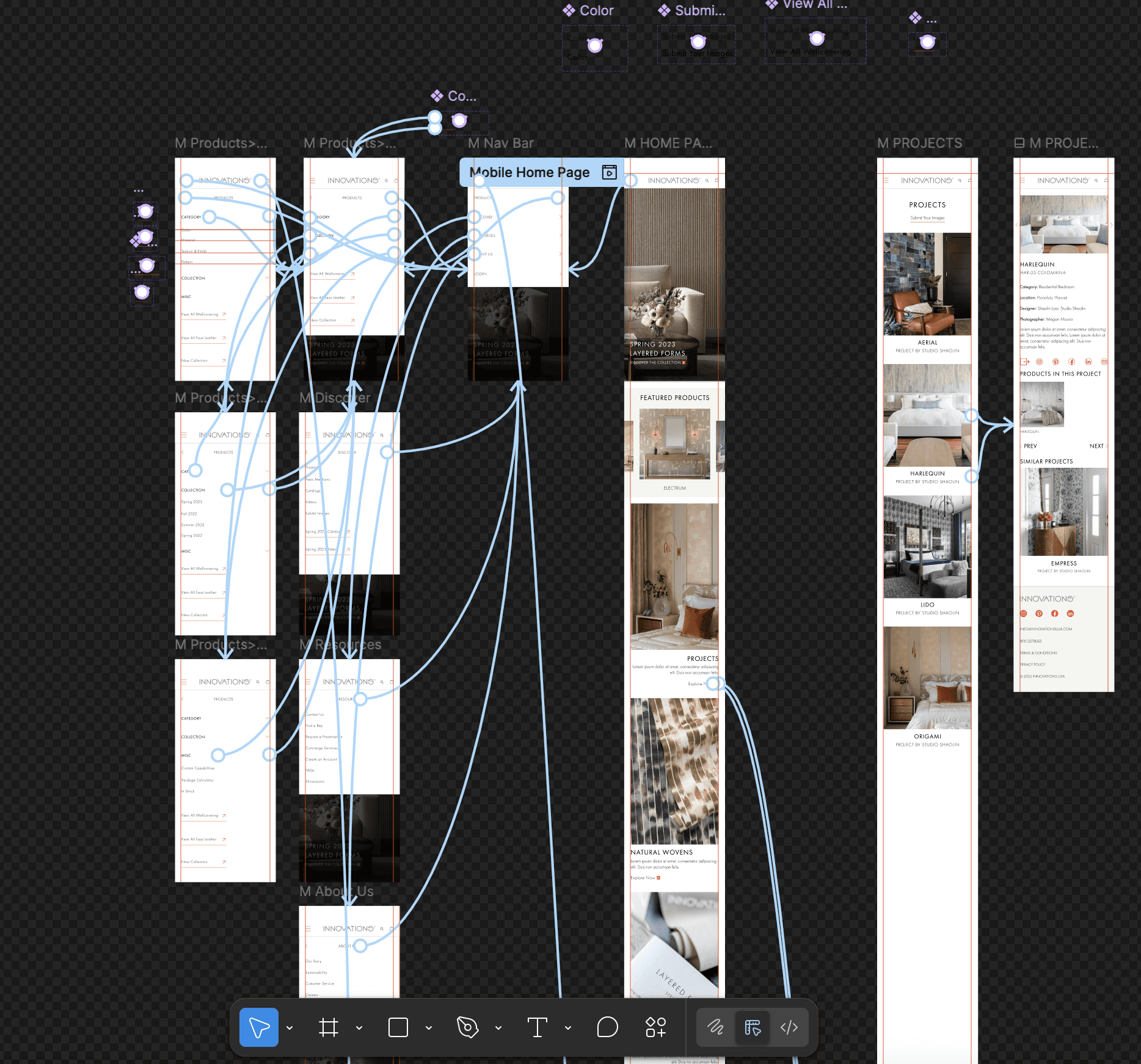
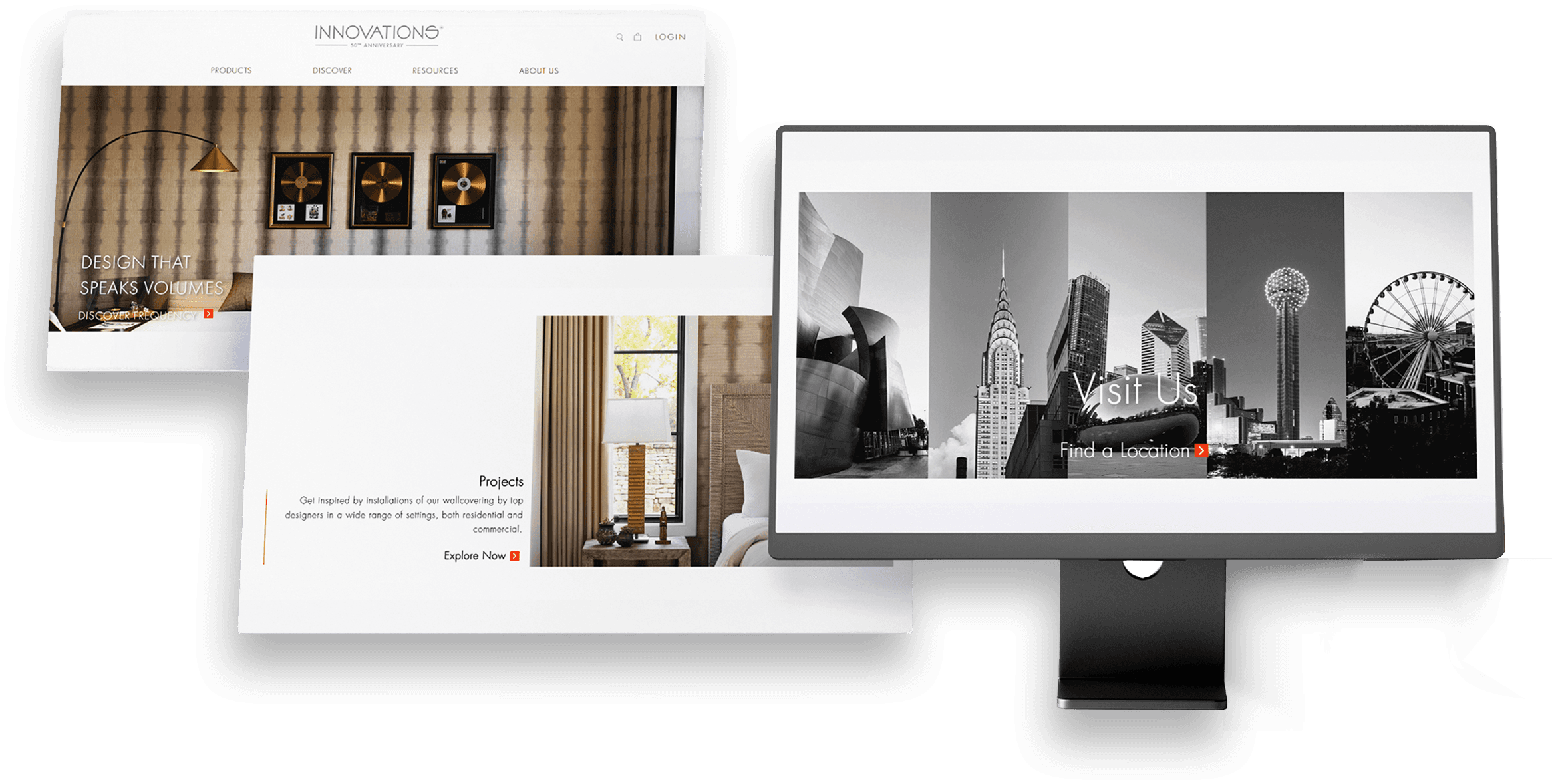
The core change was reorganising navigation around how B2B clients actually think by visual texture and collection rather than how the business had internally organised its product range. A designer looking for metallic wallcovering doesn't think in SKU categories. They think in aesthetic and material. I restructured the architecture to match that mental model.
Fewer clicks and organised around the way the users browse.
The core change was reorganising navigation around how B2B clients actually think by visual texture and collection rather than how the business had internally organised its product range. A designer looking for metallic wallcovering doesn't think in SKU categories. They think in aesthetic and material. I restructured the architecture to match that mental model.
Fewer clicks and organised around the way the users browse.
RESPONSIVE PROTOTYPING & HANDOFF
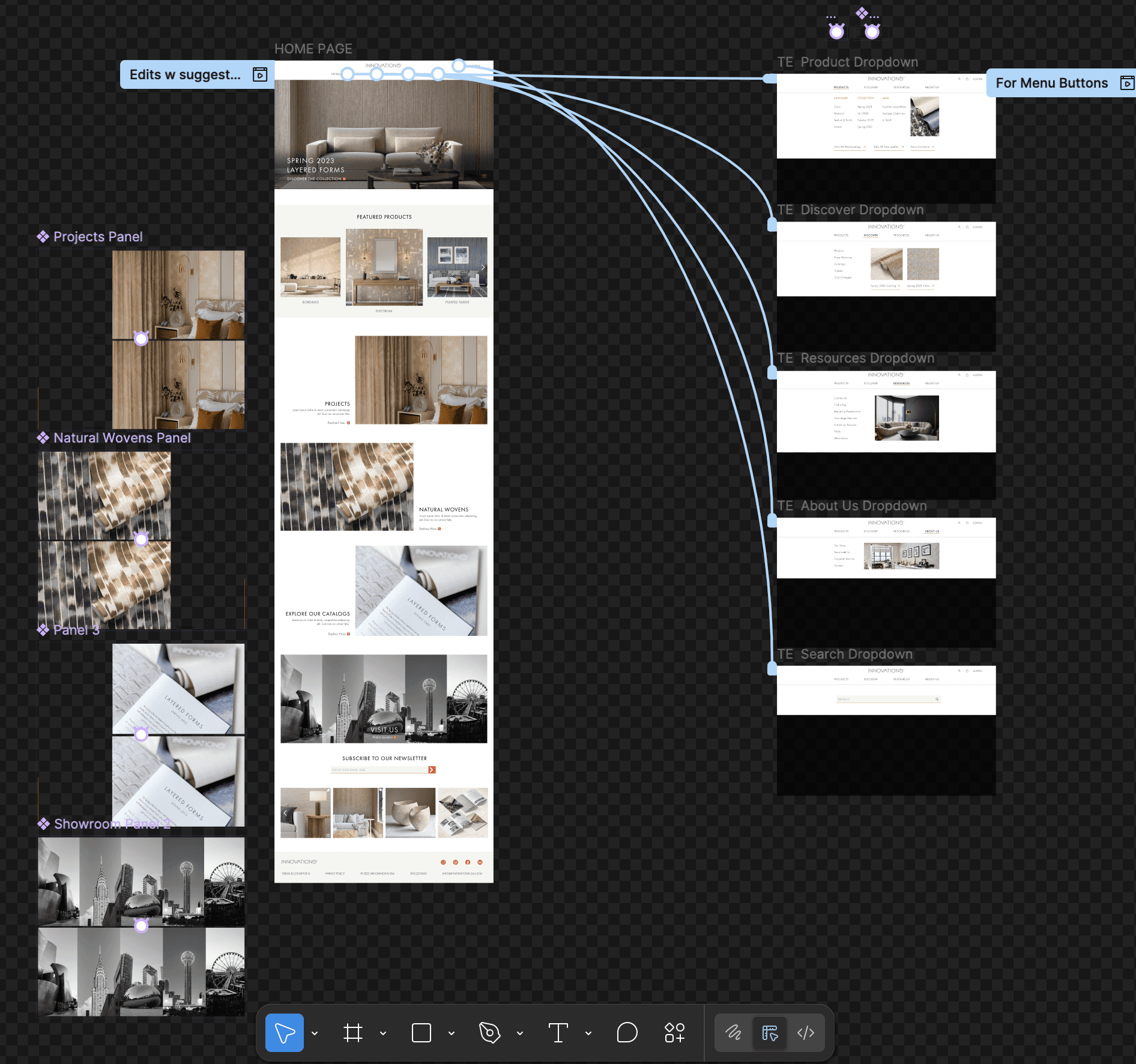
I chose to work in Figma, the team had no existing tool preference and built fully responsive prototypes across desktop, tablet, and mobile breakpoints. This wasn't asked for. I chose to do it because I understood that without working prototypes, it would be difficult to vouch for my work and without clear specs working the developer would take a long time.
Every component was annotated with dimensions, spacing, interaction behaviour, and breakpoint logic. Hover states, gallery behaviour, and subtle animations were all documented so the developer could build independently without needing me to interpret files when building. The handoff was clean enough that the site launched without me there, I'd left due to visa restrictions before it went live, but my team kept me updated. The system outlasted my time at the company by design.
Dev rework reduced by 6 weeks through annotated, spec-complete handoff
Session duration increased following the navigation and UI redesign
I chose to work in Figma, the team had no existing tool preference and built fully responsive prototypes across desktop, tablet, and mobile breakpoints. This wasn't asked for. I chose to do it because I understood that without working prototypes, it would be difficult to vouch for my work and without clear specs working the developer would take a long time.
Every component was annotated with dimensions, spacing, interaction behaviour, and breakpoint logic. Hover states, gallery behaviour, and subtle animations were all documented so the developer could build independently without needing me to interpret files when building. The handoff was clean enough that the site launched without me there, I'd left due to visa restrictions before it went live, but my team kept me updated. The system outlasted my time at the company by design.
Dev rework reduced by 6 weeks through annotated, spec-complete handoff
Session duration increased following the navigation and UI redesign
PART 2
PART 2
PART 2
PRINT COLLATERAL
LAYERED FORMS , SPRING 2023
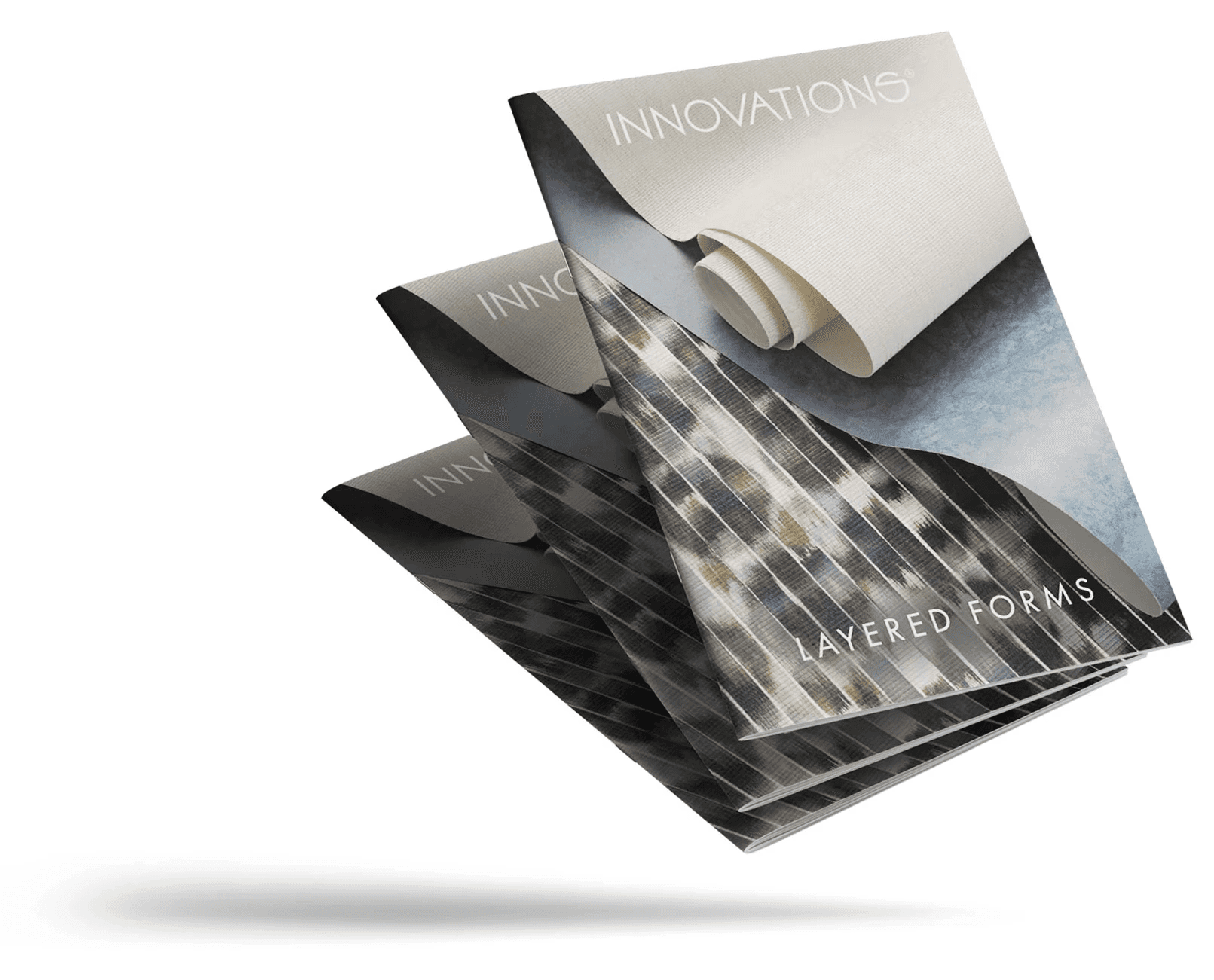
The existing print materials had the same problem as the website: they were product dumps. Grids of SKUs with specs, no narrative, nothing that made the collection feel considered. For the Spring 2023 Layered Forms collection I was given the same loose brief, modernise the look and feel of the assets so I took took full creative ownership with the manager.
I redesigned the catalog from cover to cover, alongside accordion fold mailers and postcards for showroom use. The structural change was moving from a layout-first approach to a narrative-first one: the collection needed to feel like it had been curated, not merely catalogued. Opening spreads set the concept, hero pieces were given room to breathe, and coordinating patterns were shown in context rather than isolation.
The existing print materials had the same problem as the website: they were product dumps. Grids of SKUs with specs, no narrative, nothing that made the collection feel considered. For the Spring 2023 Layered Forms collection I was given the same loose brief, modernise the look and feel of the assets so I took took full creative ownership with the manager.
I redesigned the catalog from cover to cover, alongside accordion fold mailers and postcards for showroom use. The structural change was moving from a layout-first approach to a narrative-first one: the collection needed to feel like it had been curated, not merely catalogued. Opening spreads set the concept, hero pieces were given room to breathe, and coordinating patterns were shown in context rather than isolation.
LAUNCH EBLASTS & PHOTOSHOOT SUPPORT
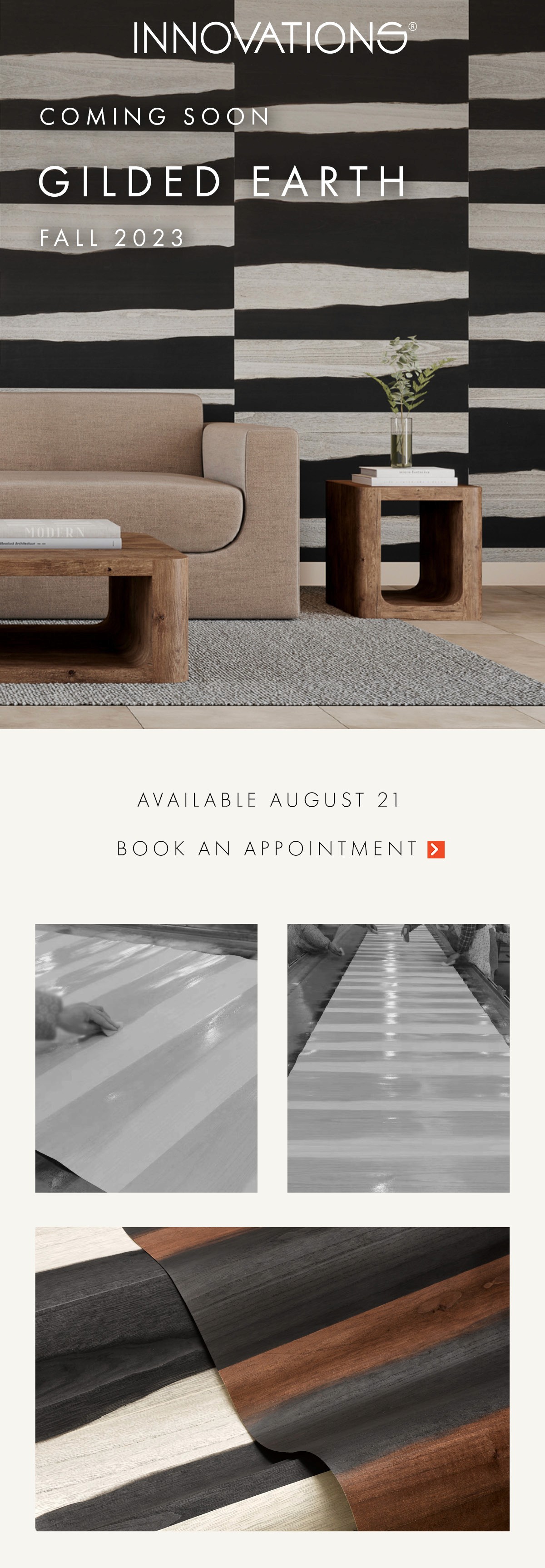
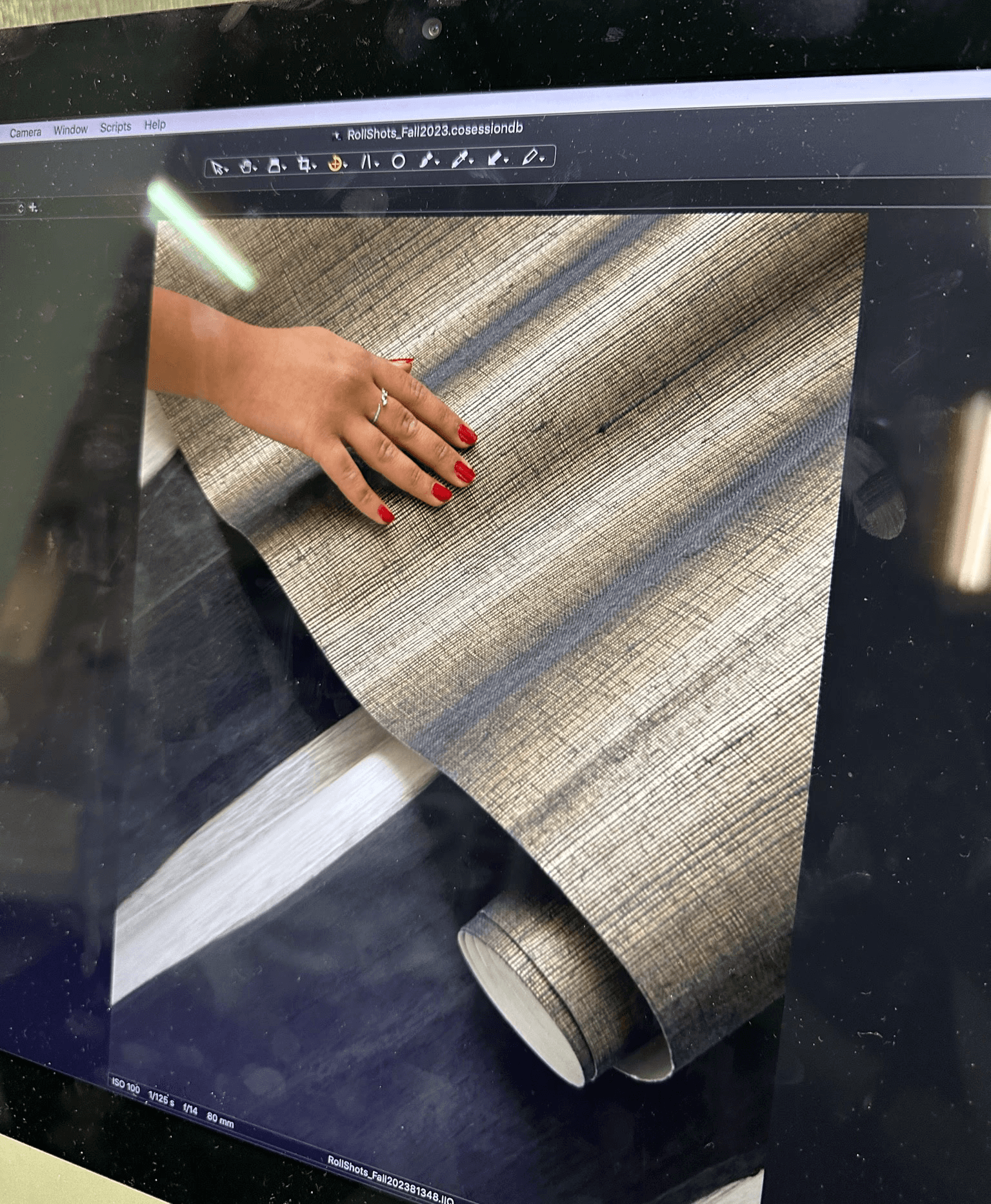
For each collection launch, I designed the email sequences, teaser and launch e-blasts and prepared all digital assets for web and social. Assets were adapted per channel rather than just resized, maintaining the visual identity of the collection across every touchpoint. Across 3 launches, I delivered 30+ assets consistently on time and on brand.
For each collection launch, I designed the email sequences, teaser and launch e-blasts and prepared all digital assets for web and social. Assets were adapted per channel rather than just resized, maintaining the visual identity of the collection across every touchpoint. Across 3 launches, I delivered 30+ assets consistently on time and on brand.
OUTCOME
What this role taught me was that good design in a resource-constrained environment is about documenting clearly and building things that don't require you to be present to function. The navigation system, the Figma components, the print templates, all of it continued being used after I left. That's the measure I care about.
Session duration increased through navigation and UI redesign
6 weeks of development rework eliminated through clean Figma handoff
30+ assets delivered across 3 collection launches
Design system and documentation remained in active use post-departure
What this role taught me was that good design in a resource-constrained environment is about documenting clearly and building things that don't require you to be present to function. The navigation system, the Figma components, the print templates, all of it continued being used after I left. That's the measure I care about.
Session duration increased through navigation and UI redesign
6 weeks of development rework eliminated through clean Figma handoff
30+ assets delivered across 3 collection launches
Design system and documentation remained in active use post-departure